The Future of XXL Cannabis Genetics
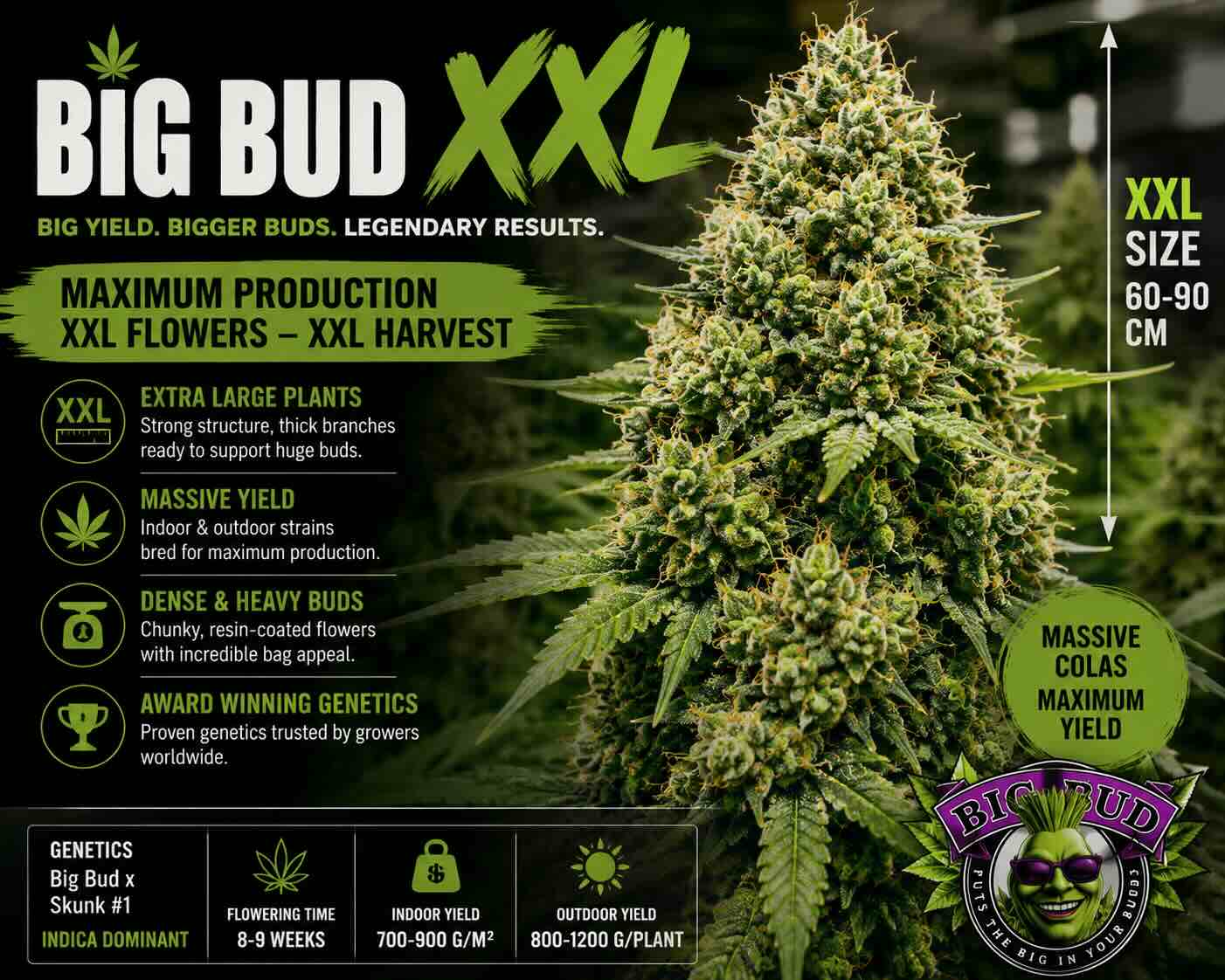
Big Bud genetics became famous because they represented one of the clearest examples of selective breeding focused on production. Growers searching for large harvests, dense flowers, and commercially efficient plants became increasingly interested in strains capable of producing exceptionally heavy yields both indoors and outdoors.
High-yield cannabis strains changed cultivation culture significantly because they demonstrated how breeding could optimize plant structure, flowering behavior, nutrient uptake, and flower density. Breeders gradually selected plants capable of supporting larger flower formations while maintaining acceptable resin production and overall plant health.
The rise of indoor cultivation accelerated interest in high-production genetics. Growers investing in lighting systems, ventilation, nutrients, and environmental control wanted genetics capable of maximizing productivity inside limited spaces. XXL strains became closely associated with efficient indoor gardening.
Outdoor growers also appreciated large-yield genetics because strong sunlight and longer vegetative periods allowed certain strains to develop extremely large structures capable of supporting enormous harvests. In favorable climates, some high-production hybrids became famous for producing truly massive plants.
Modern breeding transformed the category even further. Today many XXL strains combine strong resin production, terpene complexity, environmental adaptability, and increasingly balanced cannabinoid profiles alongside heavy yields. This combination helped move high-yield strains beyond purely commercial cultivation and into hobby growing culture as well.
Environmental management remains extremely important for large-yield cannabis plants. Heavy flowers require strong airflow, proper support systems, stable nutrition, healthy roots, and careful humidity control in order to avoid structural problems and mold pressure during late flowering.
LED technology also influenced modern XXL cultivation significantly. Efficient lighting systems allow growers to optimize canopy penetration and resin development while controlling heat more effectively inside large indoor gardens.
How Big Bud Shaped High-Yield Breeding
Modern cannabis culture increasingly values genetics capable of combining production, stability, aroma, and cultivation efficiency. Big Bud style strains remain important because they symbolize how selective breeding can dramatically influence cultivation outcomes.
Big Bud genetics became famous because they represented one of the clearest examples of selective breeding focused on production. Growers searching for large harvests, dense flowers, and commercially efficient plants became increasingly interested in strains capable of producing exceptionally heavy yields both indoors and outdoors.
High-yield cannabis strains changed cultivation culture significantly because they demonstrated how breeding could optimize plant structure, flowering behavior, nutrient uptake, and flower density. Breeders gradually selected plants capable of supporting larger flower formations while maintaining acceptable resin production and overall plant health.
The rise of indoor cultivation accelerated interest in high-production genetics. Growers investing in lighting systems, ventilation, nutrients, and environmental control wanted genetics capable of maximizing productivity inside limited spaces. XXL strains became closely associated with efficient indoor gardening.
Outdoor growers also appreciated large-yield genetics because strong sunlight and longer vegetative periods allowed certain strains to develop extremely large structures capable of supporting enormous harvests. In favorable climates, some high-production hybrids became famous for producing truly massive plants.
Modern breeding transformed the category even further. Today many XXL strains combine strong resin production, terpene complexity, environmental adaptability, and increasingly balanced cannabinoid profiles alongside heavy yields. This combination helped move high-yield strains beyond purely commercial cultivation and into hobby growing culture as well.
Environmental management remains extremely important for large-yield cannabis plants. Heavy flowers require strong airflow, proper support systems, stable nutrition, healthy roots, and careful humidity control in order to avoid structural problems and mold pressure during late flowering.
Why XXL Strains Became Popular Indoors
LED technology also influenced modern XXL cultivation significantly. Efficient lighting systems allow growers to optimize canopy penetration and resin development while controlling heat more effectively inside large indoor gardens.
Modern cannabis culture increasingly values genetics capable of combining production, stability, aroma, and cultivation efficiency. Big Bud style strains remain important because they symbolize how selective breeding can dramatically influence cultivation outcomes.
Big Bud genetics became famous because they represented one of the clearest examples of selective breeding focused on production. Growers searching for large harvests, dense flowers, and commercially efficient plants became increasingly interested in strains capable of producing exceptionally heavy yields both indoors and outdoors.
High-yield cannabis strains changed cultivation culture significantly because they demonstrated how breeding could optimize plant structure, flowering behavior, nutrient uptake, and flower density. Breeders gradually selected plants capable of supporting larger flower formations while maintaining acceptable resin production and overall plant health.
The rise of indoor cultivation accelerated interest in high-production genetics. Growers investing in lighting systems, ventilation, nutrients, and environmental control wanted genetics capable of maximizing productivity inside limited spaces. XXL strains became closely associated with efficient indoor gardening.
Outdoor growers also appreciated large-yield genetics because strong sunlight and longer vegetative periods allowed certain strains to develop extremely large structures capable of supporting enormous harvests. In favorable climates, some high-production hybrids became famous for producing truly massive plants.
Modern breeding transformed the category even further. Today many XXL strains combine strong resin production, terpene complexity, environmental adaptability, and increasingly balanced cannabinoid profiles alongside heavy yields. This combination helped move high-yield strains beyond purely commercial cultivation and into hobby growing culture as well.
Outdoor Conditions That Support Massive Harvests
Environmental management remains extremely important for large-yield cannabis plants. Heavy flowers require strong airflow, proper support systems, stable nutrition, healthy roots, and careful humidity control in order to avoid structural problems and mold pressure during late flowering.
LED technology also influenced modern XXL cultivation significantly. Efficient lighting systems allow growers to optimize canopy penetration and resin development while controlling heat more effectively inside large indoor gardens.
Modern cannabis culture increasingly values genetics capable of combining production, stability, aroma, and cultivation efficiency. Big Bud style strains remain important because they symbolize how selective breeding can dramatically influence cultivation outcomes.
Big Bud genetics became famous because they represented one of the clearest examples of selective breeding focused on production. Growers searching for large harvests, dense flowers, and commercially efficient plants became increasingly interested in strains capable of producing exceptionally heavy yields both indoors and outdoors.
High-yield cannabis strains changed cultivation culture significantly because they demonstrated how breeding could optimize plant structure, flowering behavior, nutrient uptake, and flower density. Breeders gradually selected plants capable of supporting larger flower formations while maintaining acceptable resin production and overall plant health.
The rise of indoor cultivation accelerated interest in high-production genetics. Growers investing in lighting systems, ventilation, nutrients, and environmental control wanted genetics capable of maximizing productivity inside limited spaces. XXL strains became closely associated with efficient indoor gardening.
Outdoor growers also appreciated large-yield genetics because strong sunlight and longer vegetative periods allowed certain strains to develop extremely large structures capable of supporting enormous harvests. In favorable climates, some high-production hybrids became famous for producing truly massive plants.
How Modern Breeding Changed XXL Genetics
Modern breeding transformed the category even further. Today many XXL strains combine strong resin production, terpene complexity, environmental adaptability, and increasingly balanced cannabinoid profiles alongside heavy yields. This combination helped move high-yield strains beyond purely commercial cultivation and into hobby growing culture as well.
Environmental management remains extremely important for large-yield cannabis plants. Heavy flowers require strong airflow, proper support systems, stable nutrition, healthy roots, and careful humidity control in order to avoid structural problems and mold pressure during late flowering.
LED technology also influenced modern XXL cultivation significantly. Efficient lighting systems allow growers to optimize canopy penetration and resin development while controlling heat more effectively inside large indoor gardens.
Modern cannabis culture increasingly values genetics capable of combining production, stability, aroma, and cultivation efficiency. Big Bud style strains remain important because they symbolize how selective breeding can dramatically influence cultivation outcomes.
Big Bud genetics became famous because they represented one of the clearest examples of selective breeding focused on production. Growers searching for large harvests, dense flowers, and commercially efficient plants became increasingly interested in strains capable of producing exceptionally heavy yields both indoors and outdoors.
High-yield cannabis strains changed cultivation culture significantly because they demonstrated how breeding could optimize plant structure, flowering behavior, nutrient uptake, and flower density. Breeders gradually selected plants capable of supporting larger flower formations while maintaining acceptable resin production and overall plant health.
The rise of indoor cultivation accelerated interest in high-production genetics. Growers investing in lighting systems, ventilation, nutrients, and environmental control wanted genetics capable of maximizing productivity inside limited spaces. XXL strains became closely associated with efficient indoor gardening.
Managing Heavy Flowers for Healthy Growth
Outdoor growers also appreciated large-yield genetics because strong sunlight and longer vegetative periods allowed certain strains to develop extremely large structures capable of supporting enormous harvests. In favorable climates, some high-production hybrids became famous for producing truly massive plants.
Modern breeding transformed the category even further. Today many XXL strains combine strong resin production, terpene complexity, environmental adaptability, and increasingly balanced cannabinoid profiles alongside heavy yields. This combination helped move high-yield strains beyond purely commercial cultivation and into hobby growing culture as well.
Environmental management remains extremely important for large-yield cannabis plants. Heavy flowers require strong airflow, proper support systems, stable nutrition, healthy roots, and careful humidity control in order to avoid structural problems and mold pressure during late flowering.
LED technology also influenced modern XXL cultivation significantly. Efficient lighting systems allow growers to optimize canopy penetration and resin development while controlling heat more effectively inside large indoor gardens.
Modern cannabis culture increasingly values genetics capable of combining production, stability, aroma, and cultivation efficiency. Big Bud style strains remain important because they symbolize how selective breeding can dramatically influence cultivation outcomes.
Scientific information regarding agriculture, plant breeding, cultivation systems, and crop science can be explored through the United Nations Office on Drugs and Crime.
As cannabis breeding continues evolving, XXL genetics will likely remain important because growers consistently value efficiency, stability, and high production potential. Modern breeders increasingly focus on balancing massive yields with terpene quality, resin production, and environmental resilience.
The enduring popularity of Big Bud style genetics reflects how deeply cultivation culture values plants capable of combining productivity with modern breeding sophistication.
At a Glance
- Big Bud became a landmark example of breeding for heavier yields and larger flower production.
- XXL cannabis genetics are shaped by plant structure, flowering behavior, nutrient uptake, and flower density.
- Indoor growing, LED lighting, and environmental control increased demand for high-production strains.
- Modern XXL strains often combine yield with resin quality, terpene complexity, and better adaptability.
- Strong airflow, support, and humidity control are essential for managing heavy-flowering plants.
Frequently Asked Questions
Why did Big Bud genetics become so influential?
They became known as a clear example of selective breeding focused on production and large harvest potential.
What makes XXL cannabis genetics different from other strains?
They are bred to support larger flower formation, strong plant structure, and heavy yields while maintaining overall plant health.
Why are XXL strains popular with indoor growers?
Indoor growers value genetics that can produce efficiently in controlled spaces with lighting, ventilation, and nutrient management.
What challenges come with growing high-yield cannabis plants?
Heavy flowers can require airflow, support, stable nutrition, and humidity control to reduce structural stress and mold risk.
How has modern breeding changed XXL strains?
Many modern XXL strains now aim to combine high yields with resin production, terpene complexity, and environmental adaptability.